
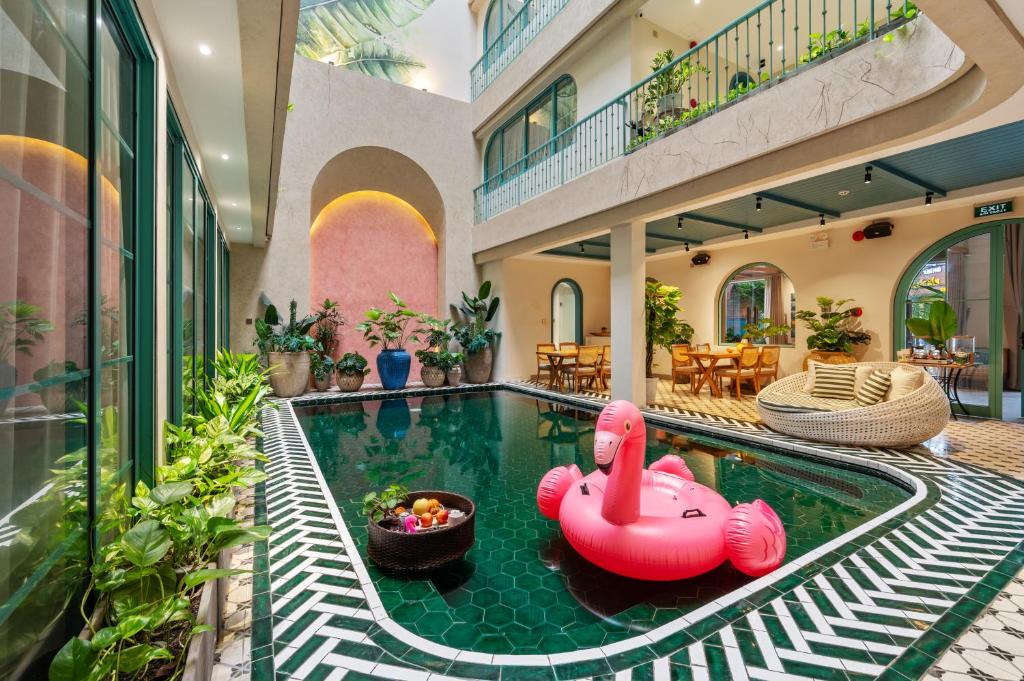
In the fiercely competitive hospitality and accommodation industry, owning a stunning hotel or occupying a prime location is merely a necessary condition. The sufficient condition for maintaining a stable occupancy rate and achieving a quick return on investment (ROI) is a well-structured hotel marketing strategy.
Many investors make the mistake of focusing solely on construction and operations while neglecting marketing, or relying entirely on third-party booking platforms. To build an effective and cost-optimized marketing plan, investors must prioritize completing the 3 crucial tasks below.
1. Define Brand Positioning and Unique Selling Proposition (USP)
Before allocating a budget to advertising activities, investors must clearly answer one fundamental question: “Why should guests choose your hotel over dozens of nearby competitors?” Accurate positioning from the outset prevents the brand from getting dragged into negative price wars and makes it easier to reach the right target audience.
- Analyze the Target Guest Persona: Clearly identify your priority audience whether they are leisure travelers, business professionals (MICE), families, or trend-seeking Gen Z travelers. Understanding their age, behavior, and spending power ensures your promotional messages hit the mark.
- Establish the Hotel’s USP: Find your distinctive edge through unique architectural styles (such as Indochine or modern minimalism), prime locations, personalized service quality, or signature amenities like a luxury Spa, Rooftop Bar, or exceptional local cuisine.
- Align the Brand Story: Standardize the overall brand identity—from the logo, core color scheme, and tone of voice to employee service standards. Consistency helps your hotel leave a lasting impression on guests.
2. Build a Multi-Channel Distribution Matrix and Optimize Direct Bookings
Over-relying on Online Travel Agencies (OTAs) such as Agoda or Booking.com is a financial trap. High commission rates typically ranging between 15% and 25% severely erode net profits. A smart marketing strategy requires establishing a balanced multi-channel distribution ecosystem that effectively pairs broad outreach with direct booking channels.
- Optimize Presence on OTAs: Treat OTAs as promotional tools to quickly reach new and international travelers. Invest in high-quality imagery, provide transparent details, and actively maintain high rating scores.
- Develop Direct Booking Channels: Turn your official website into a high-converting booking tool by integrating a seamless Booking Engine, optimizing mobile responsiveness, and implementing SEO. Direct bookings help retain maximum profit margins and capture valuable guest data.
- Engage Audiences on Social Media: Leverage platforms like Facebook, TikTok, and Instagram to connect emotionally with travelers. Produce short-form video content (Reels, TikTok) showcasing real guest experiences, amenities, or partner with relevant travel influencers (KOLs/KOCs).
- Invest in Local SEO and Google Business Profile: Ensure your property appears immediately when travelers search for accommodations on Google Maps. Keep your address, phone number, and photos updated while actively encouraging 5-star reviews from past guests.
3. Design Flexible Pricing Strategies and Measure ROI
Marketing in the hotel industry is inextricably linked to revenue management. A marketing strategy is only truly successful when it drives actual cash flow, optimizing revenue per available room rather than merely generating vanity metrics on social media.
- Implement Dynamic Pricing: Adjust room rates flexibly based on peak/off-peak seasons, weekdays vs. weekends, or local events and festivals to maximize yield.
- Promote Experience Packages Over Direct Discounting: During soft openings or low seasons, avoid slashing room rates—which can devalue your brand. Instead, create value-added bundles (e.g., Room + Breakfast + Spa Treatment) to stimulate demand.
- Track Costs and Measure ROI: Rigorously monitor key metrics like Customer Acquisition Cost (CAC) and Revenue Per Available Room (RevPAR). Regular tracking allows investors to reallocate budget toward the highest-performing marketing channels.
Building a hotel marketing strategy is a long-term process that requires a blend of sharp positioning, broad sales coverage, and flexible revenue management. Investing seriously in marketing from the early stages empowers investors to shorten payback periods, secure an independent stream of guests, and build a sustainable brand in the market.
Contact for Hotel Management & Operations Consulting:
- Hotline: 0868831166
- Email: info@jabaygroup.vn